Ellipsis Prints
Full print01 / 04

Emily Moore

Ellipsis No. 21

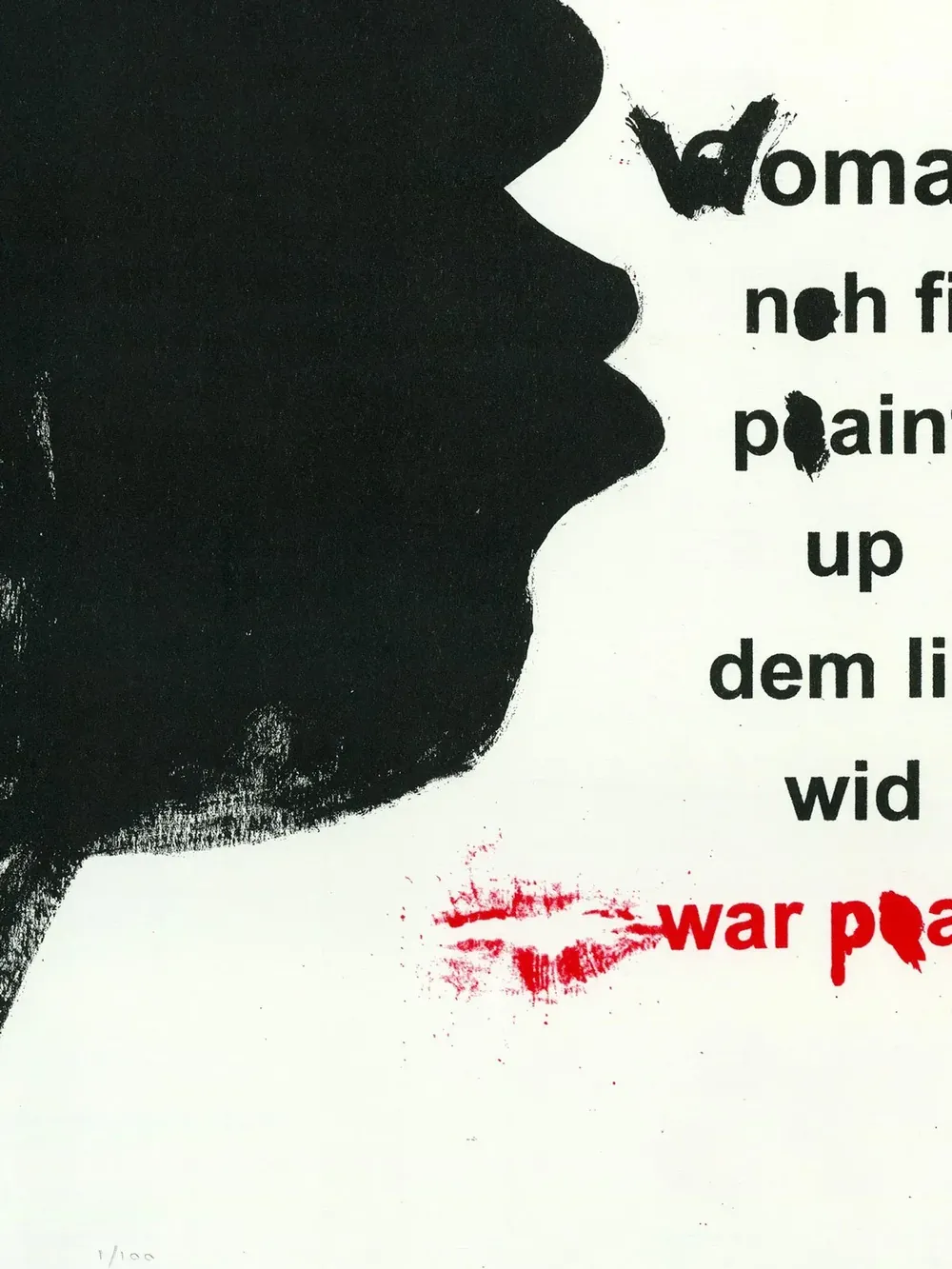
Women are not supposed to wear war paint (lipstick) on their lips, 2021

Edition of 100 · Signed and numbered by the artist

£100

Medium
Risograph print
Paper
Olin natural white 170gsm
Dimensions
42 x 29.7 cm (A3)
Framing
Sold unframed
Edition
100
Collection
Collection Two, 2021

Despatched within 2–3 working days · Free tracked UK delivery

Tracked & insured · 14-day returns · Ships from Brighton

Prints are despatched from the UK within 2–3 working days. They are delivered unframed, rolled in a tube, and sent via a tracked service with full insurance. UK: free (Royal Mail tracked). Europe: £40 and US & Canada: £50 — courier delivery including all duties and taxes, nothing to pay on arrival. Rest of world: £45 (tracked courier; local fees and taxes may be payable). Not entirely happy? Return it in its original condition and packaging within 14 days for a full refund.

A limited edition risograph print — edition of 100. Unique to Ellipsis Prints and not available elsewhere. Once the edition is complete, no further prints are created.

Questions about framing, edition numbers or collecting Emily Moore’s work? Send Kate a note and she’ll reply personally.

Contact Kate

“Emily builds complex surfaces through layers of drawing, stitching and material. Her work brings together personal and collective histories, allowing the image to emerge gradually.”

Kate Neave, Curator

I. The story behind the work

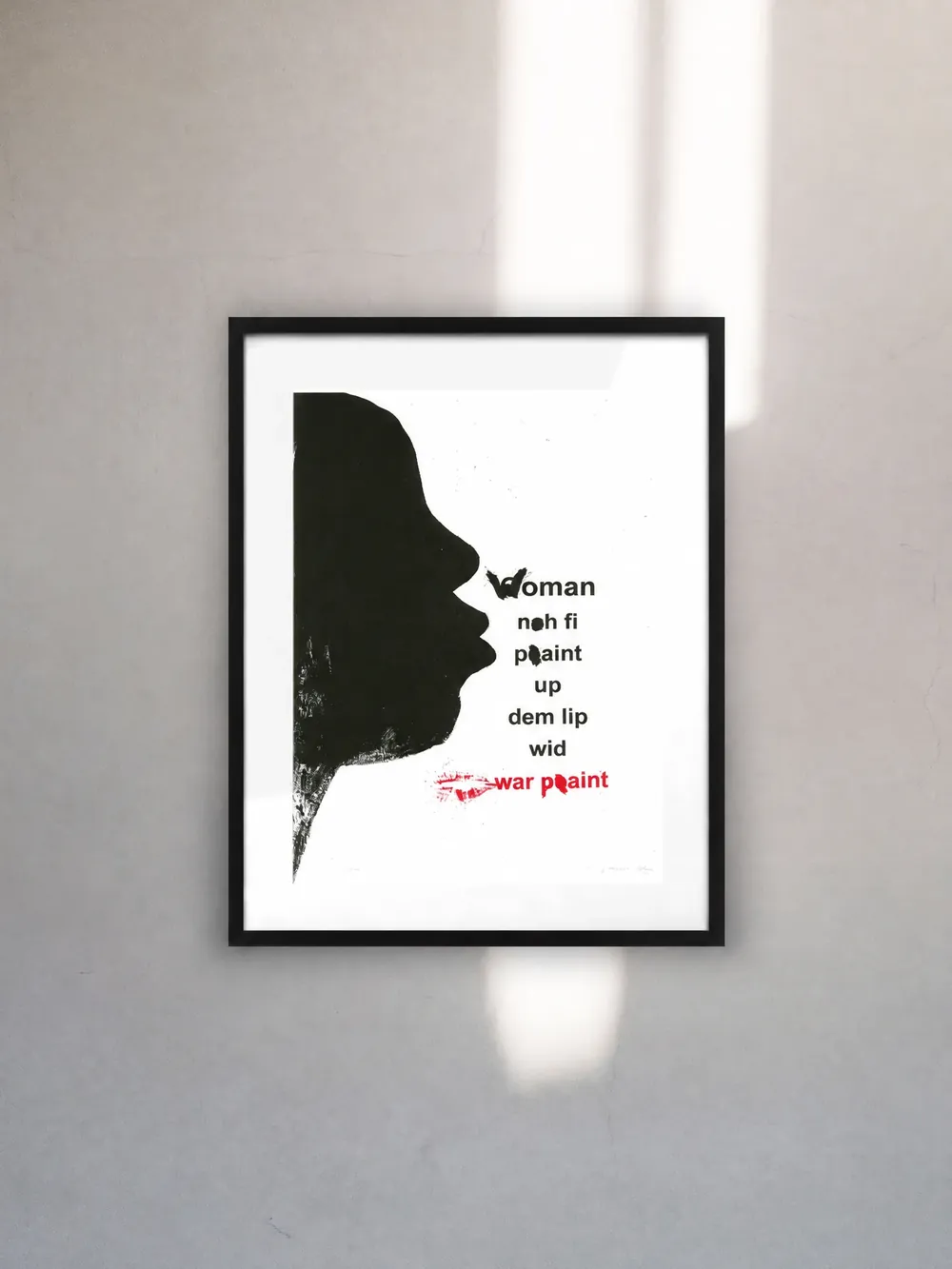
Women are not supposed to wear war paint (lipstick) on their lips

Artist Emily Moore’s print draws inspiration from the story that, in 1912, Elizabeth Arden distributed red lipstick to suffragettes marching for the right to vote. The gesture, small but symbolically charged, reframed lipstick as an emblem of defiance rather than decoration.

Across the composition, Moore incorporates the phrase: “Woman (Ooman) noh fi paint up dem lip wid war paint” — Jamaican patois for “women are not supposed to wear lipstick on their lips.”

The statement exposes the policing of women’s appearance and expression across cultures. By placing this phrase at the centre of the work, the artist Emily Moore highlights how patriarchal control operates globally—shaping who is permitted visibility, voice and self-definition.

In Moore’s hands, lipstick becomes more than cosmetic. It functions as metaphor: for speech, for dissent, for the right to occupy space publicly. The red mark shifts from adornment to declaration.

Having witnessed the erasure of many women artists from art historical narratives, particularly women of colour, Emily Moore’s practice remains attentive to how race, gender and class intersect in systems of exclusion. 
Women are not supposed to wear war paint (lipstick) on their lips — Framed in black
Framed in black

II. Technique

Risograph, layer by layer

In risograph printing, each colour is printed as a separate pass through a risograph machine — a stencil-based duplicator that presses organic soy inks into the paper. Risograph inks are naturally vibrant — they are renowned for their vivid colours and evident textures. The inks are transparent so layers build to create more colours. Slight shifts in registration and a soft grain make every impression subtly unique.

Women are not supposed to wear war paint (lipstick) on their lips is printed on Olin natural white 170gsm, an uncoated, FSC-certified stock whose gentle warmth lets the colours glow. The edition is strictly limited to 100 and will never be reprinted. All prints were produced at the London Centre for Book Arts.

Women are not supposed to wear war paint (lipstick) on their lips — Print detail
Print detail
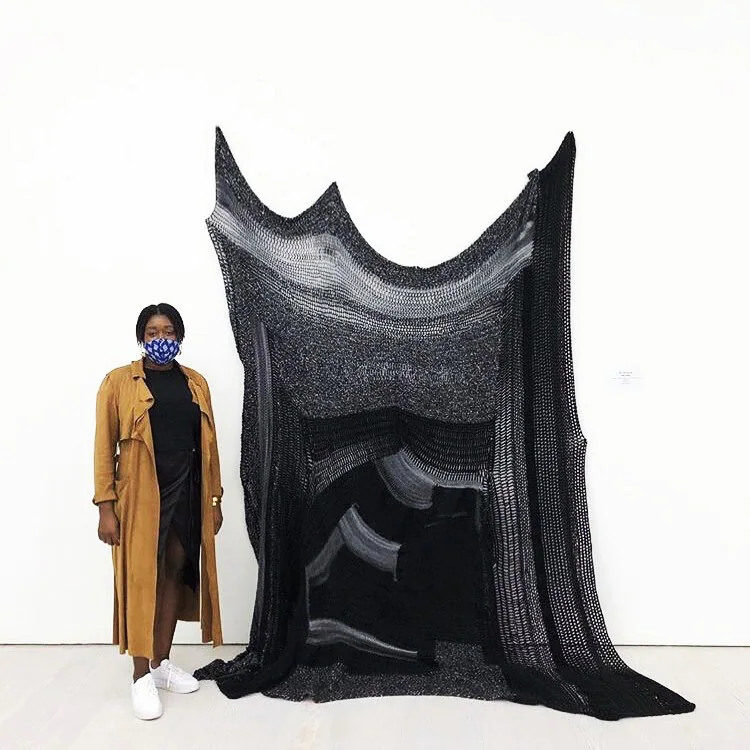
Portrait of Emily Moore
Emily Moore

Artist dossier

Emily Moore

Emily Moore is a British artist whose multidisciplinary practice spans painting, weaving, installation and performance. Working across canvas, yarn and constructed environments, Moore builds a visual language rooted in lived experience, cultural memory and inherited narratives.

As a Black British woman of Caribbean — specifically Jamaican — heritage, Emily Moore’s work engages with questions of identity, diaspora and belonging. Rather than presenting identity as fixed, her practice approaches it as fluid and evolving: a space of negotiation shaped by history, material and embodied knowledge.

More about Emily Moore