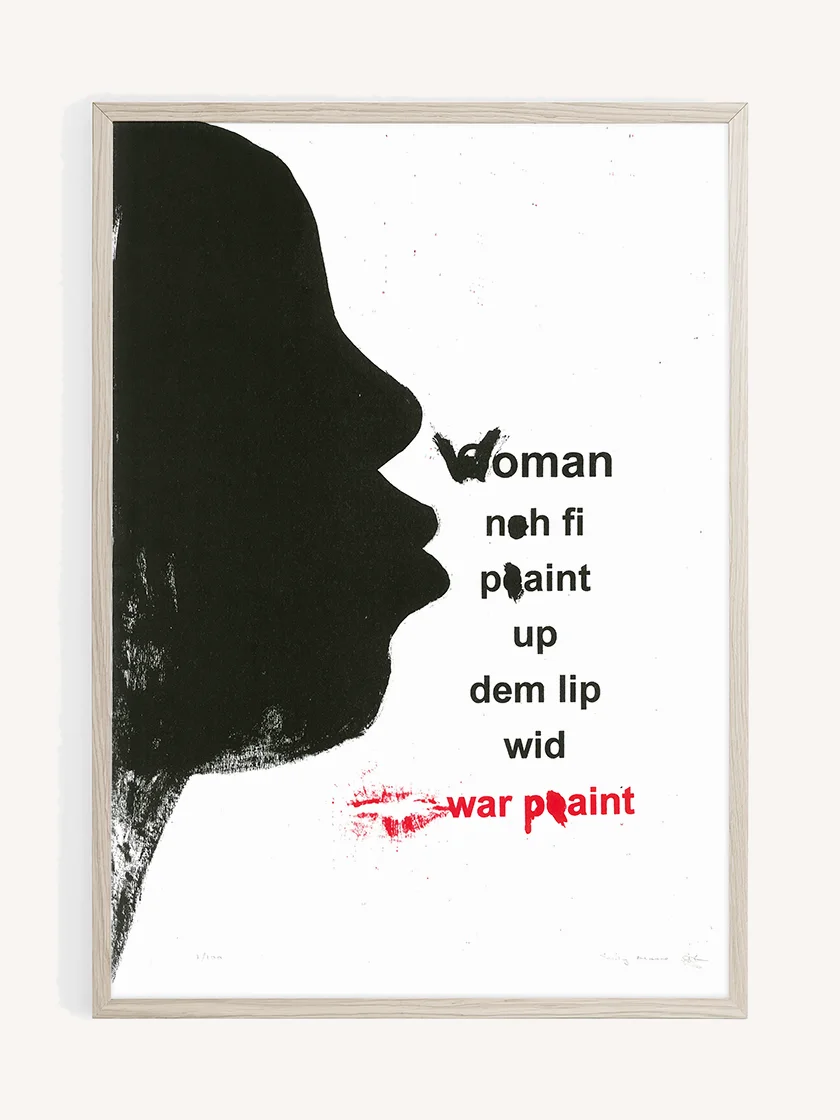
Artist · Collection Two · 2021
Prints by Emily Moore
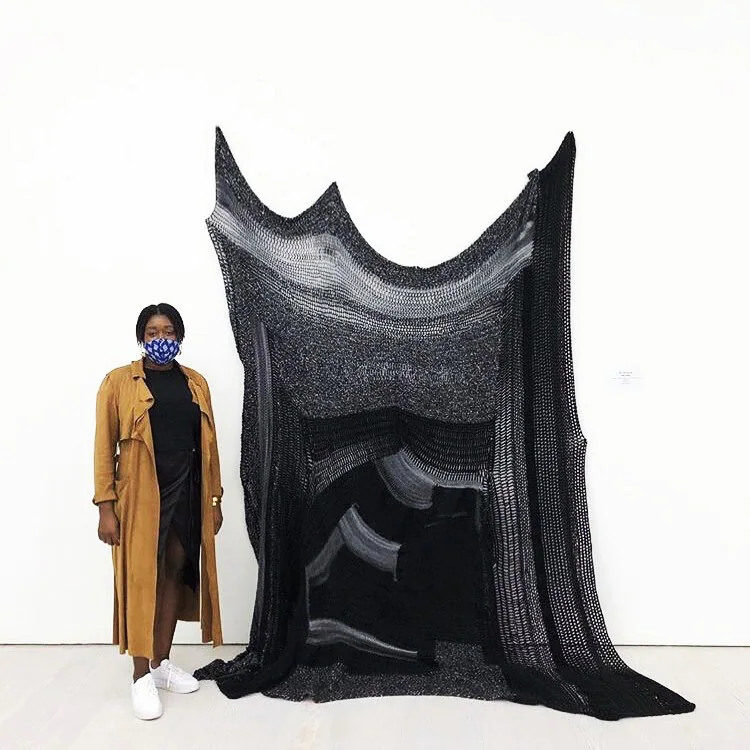
Emily Moore is a British artist whose multidisciplinary practice spans painting, weaving, installation and performance. Working across canvas, yarn and constructed environments, Moore builds a visual language rooted in lived experience, cultural memory and inherited narratives.
As a Black British woman of Caribbean — specifically Jamaican — heritage, Emily Moore’s work engages with questions of identity, diaspora and belonging. Rather than presenting identity as fixed, her practice approaches it as fluid and evolving: a space of negotiation shaped by history, material and embodied knowledge.
Exploration sits at the core of Emily Moore’s methodology. Whether working with paint, textile or participatory formats, Moore treats each medium as a site of inquiry. Threads, surfaces and gestures accumulate meaning, creating layered compositions that hold both personal and collective resonance.
Emily Moore graduated with an MA in Painting from the Royal College of Art in 2020, following a BA in Fine Art at Kensington and Chelsea College in 2018. She received the Valerie Beston Award in 2020 and presented her debut solo exhibition, Black Roses, at Ordovas Gallery, London, in 2021. Her work has since been shown at galleries including White Cube, Gagosian, Lisson Gallery and Saatchi Gallery.
Across mediums, Moore remains committed to building work that feels materially attentive and conceptually open — allowing histories to surface without being flattened.
Most recently, RCA BLK, the Royal College of Art’s association of Black students, alumni and friends, which Emily Moore co-founded and chairs, co-curated Everyday Legacies, a Black History Month exhibition at Chatham House in October 2026. She set out how the network helps Black students thrive at art school in a piece for Times Higher Education.
“Emily builds complex surfaces through layers of drawing, stitching and material. Her work brings together personal and collective histories, allowing the image to emerge gradually.”