Artist · Collection One · 2019
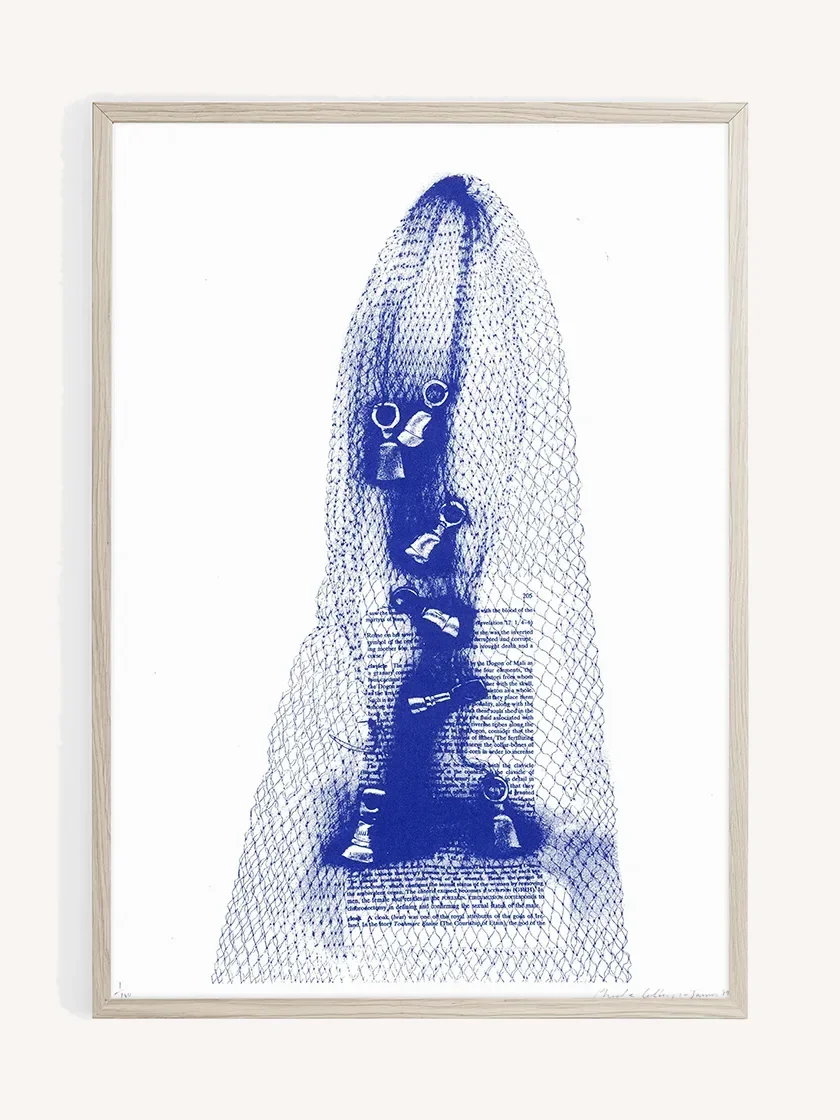
Prints by Phoebe Collings-James
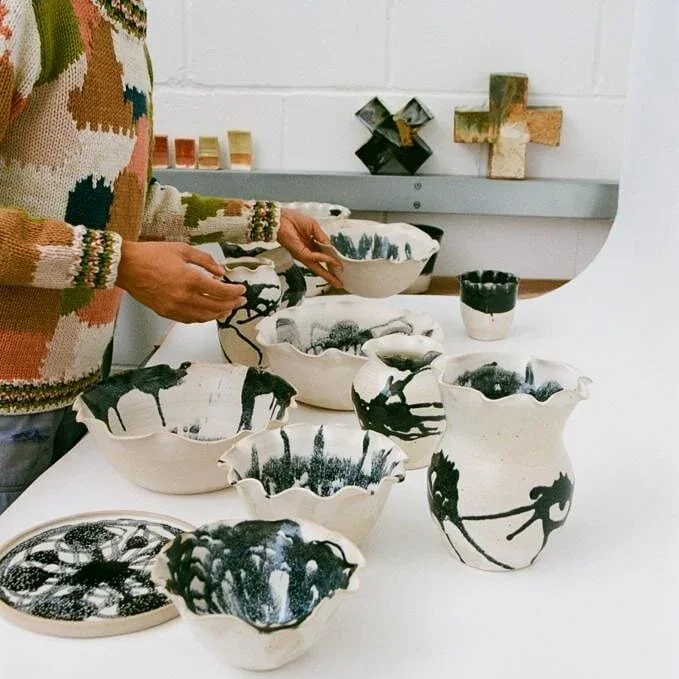
Phoebe Collings-James is a multidisciplinary artist working across sculpture, ceramics, drawing, video, performance and text. Her practice examines power, violence, language and Black subjectivity through materially and conceptually rigorous forms.
Phoebe Collings-James employs materials to destabilise Western philosophical hierarchies that privilege permanence and authority. Objects in her work resist fixity: they sag, pierce, bind or hover, existing in states of tension. Through layering, repetition and embodied performance, she interrogates the erotics and politics of fear — exposing how systems of control are internalised and enacted upon the body.
Phoebe Collings-James graduated from Goldsmiths, University of London in 2009 with a BA in Fine Art. Since then she has established a significant international exhibition profile. Her work has been presented at Tate Britain, London; MoMA PS1, New York; the Serpentine Galleries, London; and the New Museum, New York, among other major institutions. In 2019 she was awarded the Frieze Artist Award, a landmark commission recognising artists at a pivotal moment in their careers. Her installations have also featured in significant biennial contexts, contributing to global conversations around race, violence and representation.
Across her practice, Phoebe Collings-James constructs environments that confront viewers with both vulnerability and resistance — insisting on the body as a site of knowledge and disruption.
Most recently, Phoebe Collings-James’s first solo exhibition in Switzerland, Let this be the anchor at Kunsthaus Glarus, has been on view until 22 November 2026. Presented in cooperation with KH Künstler:innenhaus Bremen, the exhibition brings together seven ceramic sculptures incorporating wood and brass. Taking architectural structures and traces of public life as starting points, these new works explore the space between stability, collapse and reconstruction.
“Phoebe uses materials such as clay and metal to explore power, identity and the body. Her forms are often deliberately unstable, challenging ideas of permanence and authority.”